So far, we’ve looked at the necessity of consciously practicing the virtues (strengths), if we’re to develop the kind of embedded character which makes us ‘fit’ for the New Creation. The risk of falling for the particular vices associated with different virtues was explored, and I highlighted the way that this is often borne out in the contemporary Church, when poorly-defined virtue actually leads to entrenched vice; which is at the root of the Christian character crisis.
What remains, is to drill more deeply down into this misappropriation of virtue, in order to properly grasp what makes Christian character truly Christian; rather than the cheap imitation that so many seem happy to settle for. On the way, we’ll examine some of the subtleties which separate Christian virtue from its more philosophical competitors, to arrive at the unique and indispensable heart of Christian character formation.
Beyond Aristotle
It goes without saying that Christian character has its foundation in the person of Christ. He provides the example of what it means for us to be Christ-like. What often needs expounding, however, is the process by which we become more Christ-like. Thankfully, the New Testament is replete with guidance in exactly this direction, and the apostle Paul in particular provides thoroughly thought-through theology (say that quickly five times!) to this end. Paul himself uses the framework and language of virtue theory, in order to describe the transformation which followers of Jesus go through as they are changed into the likeness of Christ over time. For a deeper look into how Paul adapts the virtue theory which would have been available to him at the time, and repurposes it in a distinctly Christian way, you really should read Wright’s Virtue Reborn. For my purposes here, however, suffice it to say that Paul’s central emphasis on faith, hope, and love (1 Cor. 13) – which has been incorporated into every serious Christian approach to virtue since – is also Wright’s focus. Wright subsequently demonstrates how these three are ‘worked out’ through the ninefold fruit of the Spirit (Gal. 5): as real-life ‘evidence’, as it were, that faith, hope, and love do indeed “abide.”
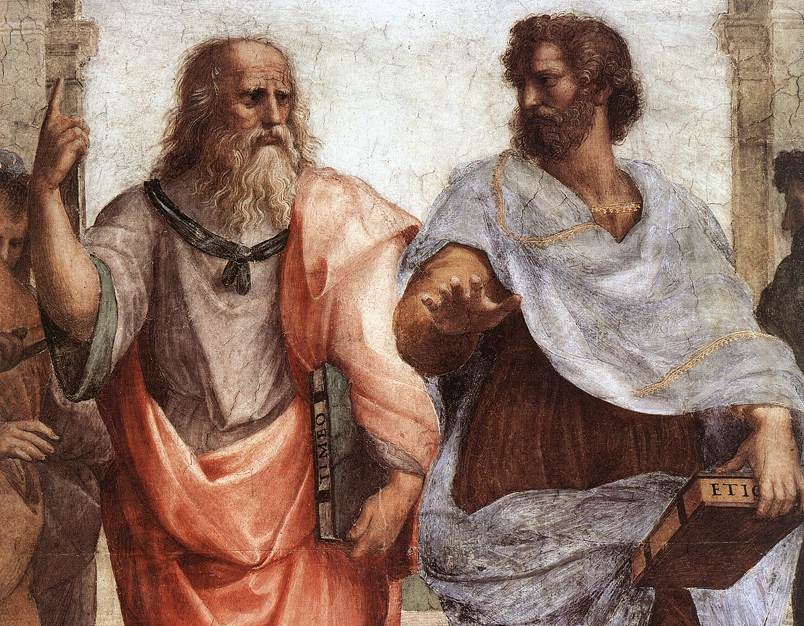
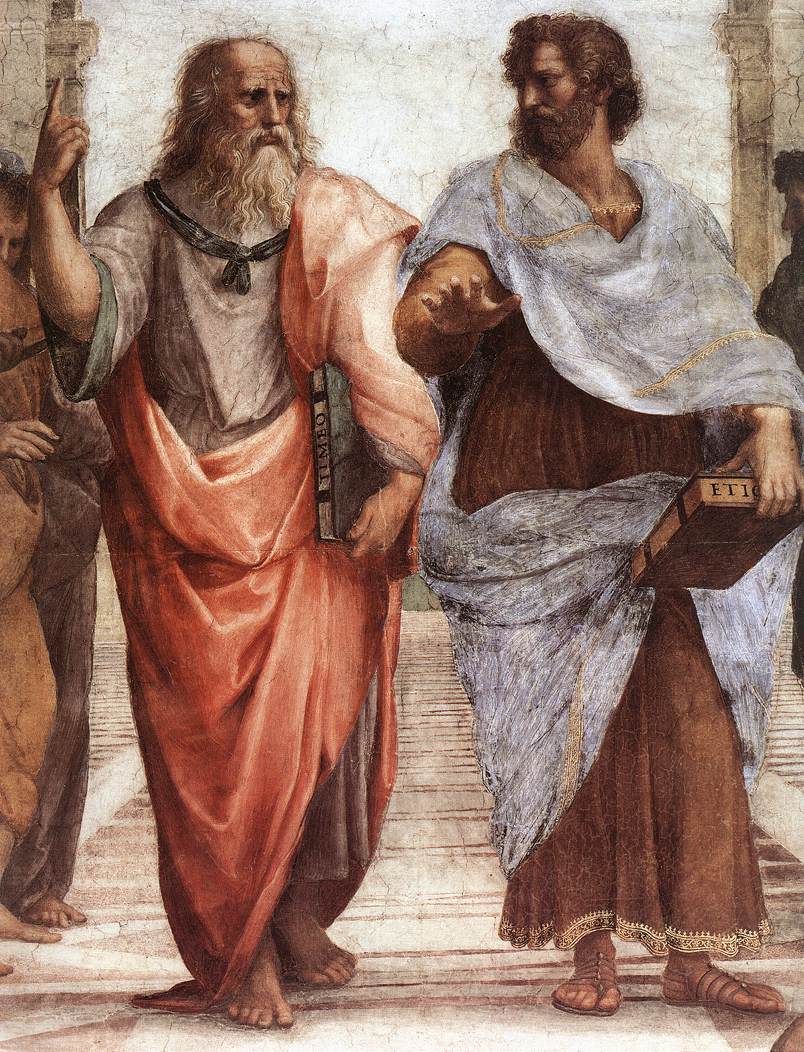
Since the time of the apostles, Christian virtue has undergone several make-overs, as various thinkers have tried to make sense of what it all means, within their own theological traditions. As such, virtue has been approached from many different angles in the intervening centuries, and become quite confused along the way. One of the main reasons for this, I think, is the interplay between philosophy and theology at various points in Church history. For example, Augustine in the fourth century – heavily influenced by Plato as he was – tended to see virtues in terms of Platonic ‘forms’, thereby betraying Aristotle’s earth-bound vision; whereas Aquinas in the thirteenth century – in typical scholastic mode – tried to revive the Aristotelian approach, but did so through the Platonic-theological lens which had pervaded so much Church teaching until his own time. What this has left us with, then – in the popular imagination – is a dualism which effectively separates out what we humans can do on the one hand, from what God does on the other. This is why, I think, many people in my own church tradition baulk at the idea of virtue (it sounds too much like ‘trying’, and therefore ‘works’); but yet also seem to expect that somehow the Spirit will work in them to bring about the faith, hope, and love that Paul talked about. Wright’s point, however, is that the fruit of the Spirit (i.e. the evidence that you are indeed a new creation person), only come ‘naturally’ insofar as they’re rooted in a life which is characterised by faith, hope and love. And a life like that can only be formed over time, by conscious habits (what Paul describes as being “transformed by the renewing of [the] mind”); which is itself only made possible through the Holy Spirit, though dependent upon our conscious and intentional participation.
Similarities and Differences
One important similarity between the classical take on virtue and the truly Christian approach, is that the virtues must be developed together: they have a mutually-regulating function. In Aristotle’s schema, a classic example shows how courage, prudence, justice and temperance balance one another: courage (the virtue) without prudence(another virtue) becomes recklessness (the vice of excess courage); justice without temperance becomes harsh; temperance without courage becomes timid… and so on. In the Christian approach, let’s take faith, hope, and love: faith without hope becomes merely mechanical agreement; hope without love becomes self-centered expectation; love without faith becomes aimless ‘niceness’. Truly Christian strength of character develops as a well-rounded whole over time, as each of the virtues – properly conceived – calibrate one another, as the Christian becomes more perfectly faithful, hopeful, and loving; in line with the example of Christ, empowered by His Spirit.
At this point, it’s worth acknowledging an obvious difference between classical virtue theory, and the Christian approach. Some of the core Christian virtues would have been viewed as defects by Aristotle; for instance, humility, or self-giving love. And when we remember that it’s only as the virtues are practiced together that they truly develop, we can appreciate that the character of a committed Christian is quite different to the fully-flourishing Greek hero in Aristotle’s view. Even where there is overlap between the two sets of virtue, those virtues that are unique to Christianity will calibrate the others (including those we have in common with Aristotle), making the resulting Christian character markedly different. Misunderstanding this difference is how many a path has become muddied. If we’re trying to work out what courage looks like in a given situation, and we’re calibrating it with two different instruments (perhaps temperance a la Aristotle, and Christian love), we’ll get stuck in indecision, puzzling over the alternative steps, and not going anywhere.
This links to another common misunderstanding, relating to Aristotle’s ‘golden mean’: the mid-point between the vices of excess and deficiency on either side, which help to locate the virtue. Again, because each virtue is itself kept in check by all of the others, the virtuous path is not simply a way between two arbitrary ‘extremes’. I’ve seen countless misappropriations of this idea, as seemingly ‘wise’ Christian leaders impose a compromise on two disagreeing parties, which effectively demands that they ‘meet half-way’ without any recourse to biblical teaching or weighing-up of the various strengths of character which the situation calls for.
The other thing to say, is that our understanding of what the virtues are will develop, even as the virtues themselves strengthen our character. What I mean is this: we know that we should be more loving, and we have a notion of what we mean by ‘loving’. Over time, however, and as we do indeed practice self-giving love, our understanding of what constitutes such love deepens. And the same is true of all the other virtues. What we once thought counted as ‘faith’, we now realise – after many years of having our faith truly tested – was just the tip of the iceberg. There’s a far, far deeper meaning to it all than we ever imagined.
The final difference I’ll highlight here, is the kind of person that results from Aristotle’s quest for eudaimonia on the one hand, and the Christian who seeks the Kingdom of God on the other. The Greek hero would undoubtedly be very proud of himself; whereas the Christian is marked by humility. The diametrical difference comes down to the driving force behind our character formation. If, on one hand, it’s all your own doing, then you’ll revel in your own achievement, and think yourself an excellent role-model who should be put in a position of power and influence; so that other people can see how wonderful you are and strive to be like you. But if, on the other hand, you know that it is only by the grace of God that you’re able to live out of faith, hope and love, your life will be characterised by humility; which points people to the source of your strength: God. What’s more, the Christian virtues are inherently oriented by community: the Kingdom of God, which is built up as we live a life in service of others. The Christian character is developed by habits of heart and mind which always have the other in view.
Character in Crisis
This leads me back to the problem which prompted this series: the Christian character crisis. Generally speaking, the contemporary church has a very blurry image of what Christian character should be. Part of the problem, I think, is that we have two (and possibly more!) radically different schemas at work simultaneously: like acetate sheets for different songs, all atop the OHP at the same time. Nobody can read the words, but we mumble along with the music as best we can, and by all appearances we’re all singing the same song. But appearances, of course, are deceiving.
By way of example – and to invoke again the Aristotelian/Christian split – many church cultures venerate their leaders and treat them like heroes in much the way you’d expect from the ancient Greeks; whilst the leaders themselves (who expect and encourage such treatment) make a compelling display of vulnerability and humility. It’s as though we’re trying for the best of both worlds, whilst pretending to be committed only to the Christian life. But the hard truth is that we all have to make a choice (indeed, a series of continual choices) about which path we’re going to walk. And that takes character.
The disturbing disparity between the impressions that are given in public, and the reality behind the scenes, reveals a total lack of integrity and disregard for Christian character. Instead, the focus is on charisma. Charisma can easily engage people for a church meeting or conversation over coffee, and capitalises on emotional energy. It feels invigorating and convincing. Character, however, takes time and concerted effort, and only becomes evident to others as they witness established patterns of behaviour over the long-term.
Christian character is in crisis precisely because we have allowed charisma to take the place of character. The result has been a promotion of leaders who can draw a crowd, but can’t make disciples (which, incidentally, involves “teaching them to obey everything [Jesus] commanded”). This setup perpetuates the focus on charisma, as aspiring leaders look to those in positions of authority and follow their example; resulting in a greater and greater shift in focus over time, towards appearances and away from truth. And this is always at the expense of truly Christian character.
This blog is moving to substack, where you can subscribe to receive all future posts and access other resources.