
We’ve seen how the preceding section, in John 14, gives us a clue as to what Jesus employs the vine metaphor for in chapter 15; what it is he is trying to illustrate through this analogy. This background context was the first of two threads, which will be brought together in a moment. But the first thread deserves a quick summary before we move on to the second:
- Jesus insists that his disciples show their love for him by keeping his commands. As a result of this, they’ll receive the Holy Spirit.
- Jesus declares that he will rise from the dead, and the disciples will share is this resurrection life; they will be in him, and he will be in them.
- The emphasis throughout is love for Jesus, and keeping his commands: these two go together. Obedience and love are inseparable.
- Jesus speaks the Father’s words. He is the word of God.
- The Holy Spirit will bring to memory Jesus’ words, revealing their fuller meaning (including how they are to be lived out).
- Jesus promises his disciples real peace (which is quite unlike what the world offers).
- The way Jesus shows his love for the Father is to do what the Father has commanded: go to his death on the cross.
The Second Thread: Staying Connected
The second thread is a consideration of what the vine metaphor adds to Jesus’ farewell discourse. He’s told the disciples some very important truths, and they’re now on their way to where Jesus will be betrayed and arrested.
Vineyards would have been a fairly common sight for Jesus and his disciples, and whilst probably not experts in viticulture, they’d have known enough about what’s involved in tending a vine to understand how it relates to Jesus’ words; and to better understand what Jesus had meant, as a result. Chapter 15 starts with, “I am the true vine,” which straightaway suggests there may be a false vine. What does Jesus mean? It helps to remember that the vine had been used as a metaphor many times before Jesus, especially by the Old Testament prophets.
In Isaiah, Jeremiah, and Ezekiel, the vine is used to describe God’s people, Israel: cared for by God, but only giving him bad fruit for his trouble. The vine is described as “wild”, “useless”, only good as “fuel for fire”, and the destruction of the vineyard is prophesied (see especially Isaiah 5). But there are also prophecies which look forward to a “new vine” budding out of Israel’s stump, which will eventually “fill all the world with fruit” (Isaiah 27). So it’s these ideas that are called to mind when Jesus uses the vine metaphor, and distinguishes the ‘true’ vine, from what has gone before.
Looking back over the other six “I am” statements of Jesus in John’s gospel reminds us of a few run-ins between Jesus and the Jews of his time. They thought they were doing just fine: they followed the law of Moses; they were descendants of Abraham; they we’re secure in their Jewish customs, and festivals; they had their sacred sites, and their religious leadership. They were living in those things, and looking to them for their life source: but bearing bad fruit as a result. These things were their vine, but they didn’t recognise the true vine: which is why they ultimately rejected Jesus. Jesus is the only true vine. Jesus is the only source of true life. We must keep this in mind as we read on:
John 15 – The Vine and the Branches
15 “I am the true vine, and my Father is the gardener. 2 He cuts off every branch in me that bears no fruit, while every branch that does bear fruit he prunes so that it will be even more fruitful. 3 You are already clean [pruned] because of the word I have spoken to you. 4 Remain in me, as I also remain in you. No branch can bear fruit by itself; it must remain in the vine. Neither can you bear fruit unless you remain in me.
There’s an interesting connection here between receiving Jesus’ word, and being pruned. Pruning is not comfortable. And often we might wonder why the vinedresser cuts a particular shoot or stem, because it may have looked quite promising. But the goal is good fruit, not just lots of mediocre – or bad – fruit.
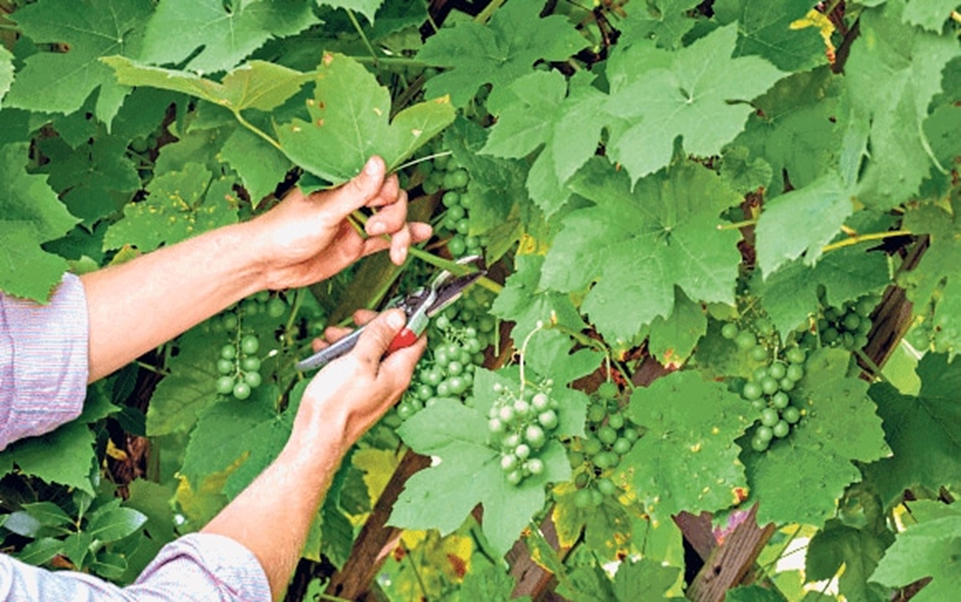
5 “I am the vine; you are the branches. If you remain in me and I in you, you will bear much fruit; apart from me you can do nothing. 6 If you do not remain in me, you are like a branch that is thrown away and withers; such branches are picked up, thrown into the fire and burned. 7 If you remain in me and my words remain in you, ask whatever you wish, and it will be done for you. 8 This is to my Father’s glory, that you bear much fruit, showing yourselves to be my disciples.
Here’s a hint as to how we are to ‘remain in’ Jesus: his words are to remain in us. If we’re constantly being nourished by Jesus’ teachings, his word, then we will naturally bear fruit of the same kind, and evidence the fact that we are his disciples. The Holy Spirit is what ensures his words ‘remain in us’.
9 “As the Father has loved me, so have I loved you. Now remain in my love. 10 If you keep my commands, you will remain in my love, just as I have kept my Father’s commands and remain in his love. 11 I have told you this so that my joy may be in you and that your joy may be complete. 12 My command is this: Love each other as I have loved you.
Again the link between love and keeping Jesus’ commands, but now we see that it’s more of a ‘sharing in’ the love between God the Father and the Son. And as we partake in that love, we naturally bear its fruit; and are able to love each other in the same way Jesus has loved us. And joy! Now notice, these passages of scripture have focussed around Love, but Jesus now also promises Joy, and earlier on Peace… and of course we’re talking about fruit. This should ring some bells…
So we are to “remain in” Jesus, sharing in his life, and showing our love of God by following Jesus’ commands – even unto death. What does that death look like? The cutting away of apparent life, in order for true life to flourish through us. We must let the Holy Spirit do his work in us, if we are to enjoy the fruit of the Spirit.
Are we ready to be pruned? It will be uncomfortable. But the good news is that it’s God who does the pruning.
 Paul S. Baker